
Swiss Science Prize Marcel Benoist
Excellence since 1920 – For more than 100 years the Marcel Benoist Foundation has awarded the eponymous Swiss Science Prize, also known as the ‘Swiss Nobel Prize’.
The Foundation awards the Swiss Science Prize Marcel Benoist independently to scientists based at a higher education institution in Switzerland. It awards scientists whose work promotes excellence in Swiss research, with the aim of bringing together the best scientists in the country and of increasing Switzerland’s attractiveness as a centre for research and innovation. This strengthens the country’s competitiveness and sustains its economic success and prosperity.
Scientific excellence is the main criterion upon which the proposals, which are submitted annually, are assessed. In a selection process based on appropriate scientific requirements, researchers are honoured whose work is “of benefit to human life” and meets the following criteria:
- it is based on an original and innovative idea,
- it points to ways of verifying this idea,
- it involves clear steps towards verifying the idea,
- it provides inspiration to young researchers to pursue the idea.

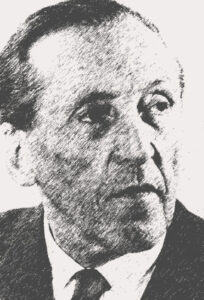
“For pure scientists, who have to make their way through the dark undergrowth across totally unknown territory, receiving such recognition of their achievements is always a huge surprise, for their work is of such a subtle nature that it usually takes years before the results of their research prove to be of any use.”
From a letter by Paul Scherrer, 1943 laureate, thanking the Marcel Benoist Foundation.
Swiss Science Prize – Excellence since 100 years
The Swiss Science Prize Marcel Benoist has been awarded annually since 1920 to a scientist whose work is of particular benefit to human life and so to society.
- Pioneering: The Prize is awarded for “the most useful scientific discovery or study, in particular in disciplines which are of significance for human life.”
- Excellent: The Prize has a unique tradition and history: in 2020 it celebrated its centenary. Eleven of the nearly 100 laureates went on to receive the Nobel Prize.
- Renowned: The Prize is the pride of any university, has high prestige in the scientific world and demonstrates the success and potential of the researcher who receives it.
- Prominent: The Prize is awarded by the federal councillor responsible for research in Switzerland.
- Multidisciplinary: Swiss researchers or those living and working in Switzerland from all disciplines are eligible to receive the award.
- National: The Prize is awarded independently to a researcher from any Swiss higher education institution.
Between 1920 and 2019, eleven Marcel Benoist Swiss Science Prize laureates went on to receive the Nobel Prize – 10 per cent of the total.
The Foundation
The Swiss Science Prize is awarded once a year by the Marcel Benoist Foundation to scientists who pursue excellence in research in Switzerland.
The Marcel Benoist Foundation was established on 19 November 1920 from the legacy of Marcel Benoist. Marcel Benoist was a French humanist living in Switzerland, who during his lifetime worked to improve the human lot, dedicating his entire wealth to this aim.
The Marcel Benoist Foundation Board of Trustees is chaired by a prominent figure in scientific research; this is currently Nobel laureate Didier Queloz. The Board comprises 14 further members: one from each of the universities and the federal institutes of technology, the French ambassador or their deputy, and a representative from federal administration management or the world of economics who has a connection to scientific research. This post is currently held by Martine Clozel.
Former presidents and trustees include Federal Councillor Guy Parmelin, former Federal Councillors Johann N. Schneider-Ammann, Ruth Dreifuss, Pascal Couchepin and Flavio Cotti, Professor Kurt Wüthrich, who was awarded the Benoist Prize in 1991 and the Nobel Prize in 2002, and Professor Martin Schwab, who won the Benoist Prize in 1994.
In 2020 the Foundation celebrated its centenary. It would like to take the Swiss Science Prize, with its long tradition, successfully into the future.
More